Tag: buying a new construction home

  • How to Save for a Down Payment on a House – 10 Simple Steps

    How to Save for a Down Payment on a House – 10 Simple Steps

    One of the biggest financial milestones in life is buying a home. The first step in making your goal of a comfortable townhome, a big single-family home property, or your first starter home come true is to save for the down payment. A lot of new purchasers wonder, “How much do I need for a down payment?” It depends on the sort of property, what your lender needs, and how much money you have. No matter what the actual amount is, having a clear plan for saving for a down payment makes the whole thing less scary and more doable.
    This guide will show you ten easy steps to help you save for a down payment. Along the way, we’ll also provide you useful ideas for buying a new house, a townhome, or a single-family home.

    Step 1: Figure out how much you need for a down payment

    You need to know what you want to save for before you start. The amount needed changes based on the type of loan and the property. FHA loans may only need 3.5% of the home’s buying price, while conventional loans may need 5% to 20%. Sometimes, VA and USDA loans don’t even need a down payment. For instance, a down payment on a $250,000 townhome may be anywhere from $8,750 (3.5%) to $50,000 (20%). A down payment on a single-family house could be larger because investment properties usually require 20–25%. Knowing these numbers can help you create a realistic savings target and keep you from being surprised later on.

    Step 2: Make a plan to save for a down payment

    Make your down payment a big financial objective, just like any other. A strategy to save for a down payment should include the amount you want to save, the time frame, and a monthly savings goal. For example, if you want to buy anything in three years and need $40,000, you’ll need to save around $1,100 a month. The process is less scary when you break it down into smaller parts. Seeing improvement every month keeps you motivated and helps you stick to your goals.

    Step 3: Set up a separate savings account

    One of the best ideas for new homebuyers who want to save for a down payment is to keep their savings separate from their regular expenditures. If you open a high-yield savings account or money market account just for your down payment, it will be harder for you to spend money that you want to use for your future home. Keeping this account separate and automating transfers every payday makes ensuring that things stay the same. It also makes it less tempting to use it for things that aren’t emergencies.

    Step 4: Spend less on things that aren’t necessary.

    You typically have to give up things to save for a down payment. Look over your monthly bills and see where you may save money. Eating out, streaming services, and shopping on a whim all add up rapidly. Putting that money into your down payment savings plan can make a significant difference. For instance, if you reduce $200 from your discretionary spending each month, you’ll save $2,400 a year. That’s $7,200 over three years, which is enough to cover closing expenses or add to your down payment.

    Step 5: Make more money from more sources

    Sometimes cutting costs isn’t enough, and making more money speeds your savings. You may do freelance work, work part-time, or sell things you don’t need online. Look into ways to make money without working, such tutoring, consulting, or selling digital goods. An extra $500 a month can cut years off the time it takes to save up. The sooner you meet your down payment goal, the faster you can make more money.

    Step 6: Pay off debt and raise your credit score.

    Your down payment is just one part of the puzzle. Lenders also check your credit score and debt-to-income ratio. Paying off credit cards with high interest rates, not taking out new loans while saving, and checking your credit report for mistakes are all wise things to do. If you have better credit, you may be able to get lower interest rates, which can cut your monthly mortgage payments and give you more money to save. This step not only helps you save money, but it also makes you a better borrower.

    Step 7: Look into programs that can help you.

    Many governments, towns, and NGOs have programs that help first-time buyers with their down payments. These could be grants that don’t have to be paid back, loans that can be forgiven if you stay in the home for a certain amount of time, or housing perks paid for by your work. Finding out about local programs could help you save thousands of dollars, which would mean you wouldn’t have to save as much. Not taking advantage of these chances is like leaving money on the table.

    Step 8: Think about the type of property and your plan

    The kind of property you want to buy will affect how much you need to save. Many first-time buyers like townhomes because they usually have lower down payments than single-family homes. Lenders regard rentals as riskier investments, so the down payment on a single-family home is usually larger. If you think carefully about the type of property you want, you may be able to buy a home sooner. If you buy a smaller home today, you may be able to create equity faster, which you can then use to buy a bigger home later.

    Step 9: Keep track of your progress and automate it.

    When saving for a down payment, it’s important to be consistent. You can make sure you never miss a contribution by setting up automatic transfers to your savings account. You can stay on track by using budgeting tools to keep track of your progress. You can also stay motivated by celebrating milestones, such hitting 25%, 50%, or 75% of your goal. Keeping track of your efforts makes saving money a fun and gratifying adventure.

    Step 10: Be patient and flexible.

    It’s not a race to save for a down payment; it’s a marathon. Life occurs; things like surprise costs, job changes, or changes in the market can modify your schedule. If you need to, change your plan, but don’t give up when things go wrong. Stay on track, and remember that every dollar you save gets you closer to owning a home. You need to be patient and keep going in this process.

    Real-Life Examples

    Let’s put this in context. Picture a first-time buyer who wants to buy a townhome that costs $250,000. A down payment of 10% would be $25,000. If they saved $700 a month, they could attain their goal in three years. Now think about an investor who is interested in a single-family home that costs $400,000. A down payment of 20% would be $80,000. If they saved $1,300 a month, they could attain their goal in five years. These examples explain how the type of property you own can change how you save and when you do it.

    Things You Should Not Do

    A lot of purchasers make mistakes because they don’t realize how much they need for a down payment. It feels like you can save forever if you don’t have a goal. Some people blend their savings with their ordinary money, which makes it too simple to squander. Some people don’t use aid programs, which means they miss out on useful help. And too many people only think about the down payment and forget about closing charges, moving costs, and emergency finances. Avoiding these blunders will keep your plan on track and make sure you’re ready to acquire a home.

    In conclusion

    It may seem hard to save for a down payment, but it’s not impossible if you have a clear plan, stick to it, and are patient. If you want to buy a townhome, a single-family home, or your first starter home, these ten easy steps will help you get there. Make sure you know how much you need for a down payment, set up a separate savings plan for it, use wise advice for new homebuyers, and change your plans based on the type of property you’re buying. For example, a townhome down payment will be different from the bigger down payment needed for a single-family home. Owning a home isn’t only about owning a place to live; it’s also about developing security, equity, and a future. You may open the door to your dream home sooner than you think if you start saving now.

  • Buying a New Construction Home: The Pros and Cons

    Buying a New Construction Home: The Pros and Cons

    Sometimes, it’s not the size of the home that makes you stop and look twice.

    It’s the cabinet color you didn’t know you wanted until you saw it.
    The way the kitchen opens into the living room, just enough to feel connected but not crowded. Or the idea that every room is untouched—waiting for your furniture, your routines, your life.

    That feeling is often what brings people to a new construction home for sale. 

    It’s not just about something being new. It’s about possibility.

    Still, buying a home—especially a brand-new one—isn’t a decision most people make lightly. There’s excitement, sure. But there are also questions, comparisons, and a fair amount of “what if.”

    This guide is here to walk you through both, honestly and thoughtfully—so you can decide what feels right for you.

    What Does “New Construction” Really Mean?

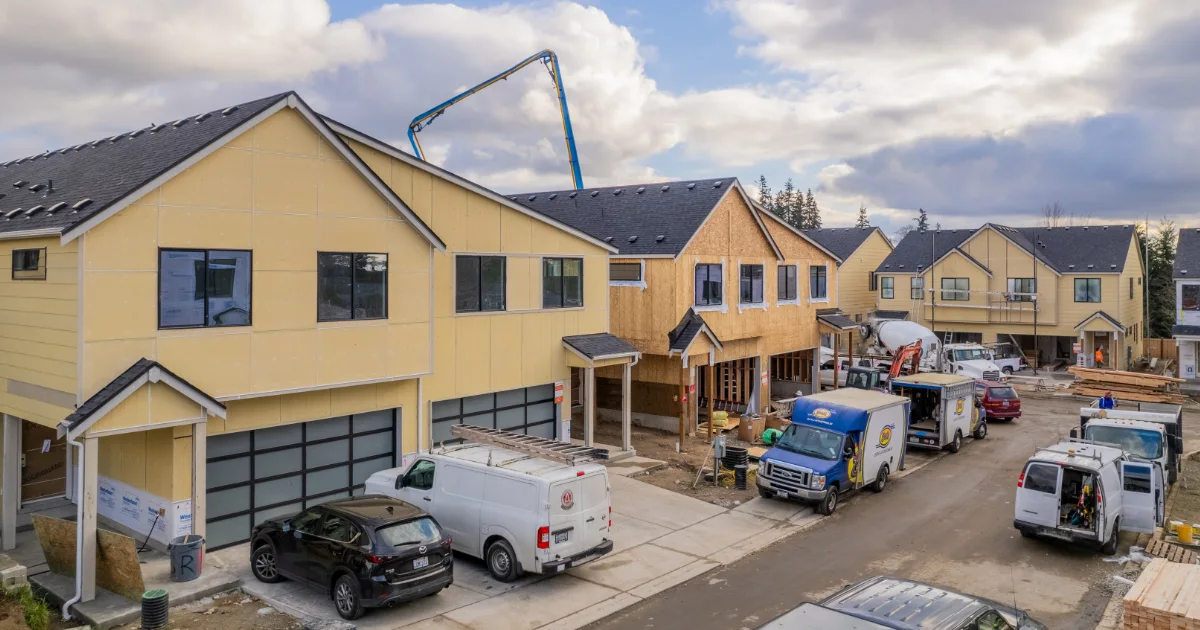
    A new construction home is exactly what it sounds like: a home that has never been lived in before. It may already be completed and move-in ready, or it may still be under construction (pre-sale), giving buyers a chance to personalise finishes and layouts. 

    These homes come in many styles and formats, including: 

    What they all share is this: they’re built for how people live today, not how homes were designed decades ago.

    Why So Many Buyers Start With New Construction

    There’s a reason many buyers begin their search by looking at brand new construction homes.

    For some, it’s about avoiding surprises. For others, it’s about modern design, energy efficiency, or simply wanting a space that hasn’t already been shaped by someone else’s choices.

    Especially for first-time buyers, new construction can feel more straightforward. There’s comfort in knowing the roof is new, the systems are updated, and the layout was designed for today’s lifestyles.

    But comfort doesn’t mean perfection—and that’s where understanding both the pros and cons really matters.

    The Advantages of Buying a New House

    1. Homes Designed for Real Life Today

    One of the biggest advantages of buying a new house is how it’s designed.

    New homes tend to reflect the way people actually live now:

    • Open kitchens that connect to living spaces
    • Rooms that flex between work, rest, and play
    • Storage that’s thoughtfully planned, not added as an afterthought

    Instead of working around walls or layouts that no longer make sense, many buyers appreciate how natural and usable new spaces feel from day one.

    2. The Ability to Make It Yours From the Start

    Depending on when you buy, you may be able to choose finishes that match your taste—things like flooring, countertops, cabinet colors, or even parts of the floor plan.

    That choice can feel empowering. Instead of changing a home later, you’re shaping it early.

    And while customization isn’t unlimited, even small decisions—like the tone of the cabinets or the feel of the flooring—can help a home feel personal in a meaningful way.

    3. Lower Maintenance at the Beginning

    Another commonly recognized advantage of new construction is peace of mind—at least in the early years.

    With a new home:

    • Systems are new
    • Appliances are new
    • Materials meet current building standards

    This doesn’t mean maintenance disappears, but it often means fewer immediate repairs. For many buyers, especially those purchasing new homes as first-time buyers, that predictability can ease a lot of stress.

    4. Energy Efficiency and Comfort

    New construction homes are built to current standards, which often means better insulation, newer systems, and more consistent temperatures throughout the home.

    While energy savings depend on many factors, a lot of homeowners notice that newer homes simply feel more comfortable day to day.

    5. Communities That Are Planned, Not Random

    Many new homes for sale are in communities that were built all at once, not over time.

    That usually means streets that people can walk on, green spaces that everyone can use, and neighborhoods that bring people together. It’s not just the house, but also the area around it.

    That sense of place is important at MSR Communities. A home should feel like it belongs where it is. 

    6. Builder Warranties

    Most new homes come with some kind of warranty. Many buyers like having that extra layer of security in the first few years of ownership, even though the specifics may vary.

    The Disadvantages of Buying a New House (And Why Many Buyers Still Choose It)

    There is no perfect choice. But considering negatives also helps you make better choices.

    1. Upfront Costs Can Be Higher: In some markets, new homes cost more at first than older homes that are being sold again. Land costs, materials, and modern features all play a role. Some buyers, on the other hand, think that the balance changes over time when fewer repairs and updates are needed.
    2. Waiting Takes Patience: If your home is still being built, timelines can shift. Things happen with the weather. Materials get delayed. Plans change.

    For buyers who need a specific move-in date, this can be a little inconvenient. For others, the wait feels worth it for a home built specifically for them.

    • Neighborhoods Take Time to Feel “Finished”

    New communities grow in phases. Trees mature. Amenities come online gradually. Construction may continue nearby for a while.

    Some people enjoy watching a neighborhood come to life. Others prefer an area that’s already fully established. Neither preference is wrong.

    • Some Features Come Later: Things like fencing, patios, or upgraded landscaping may not be included upfront. Planning for these future additions is part of owning a new home.
    • New Construction and First-Time Buyers: For many first-time buyers, new construction feels more approachable.

    There’s comfort in knowing what you’re getting. Relief in fewer immediate fixes. And clarity in pricing and features.

    That said, it’s still important to plan carefully for things like property taxes, HOA fees, and long-term affordability.

    Having the right guidance makes a difference here.

    Newly Built Townhomes or Single-Family Homes?

    When deciding between single family homes for sale and newly built townhomes for sale, it often comes down to lifestyle.

    • People who want more space, privacy, or a yard usually like single-family homes.
    • Townhomes often work well for buyers who prefer less exterior maintenance and a more connected community feel.

    Both can be great options. It’s about what fits your day-to-day life.

    So… Are the Pros Worth the Cons?

    For many buyers, yes.

    While there are trade-offs, the advantages of buying a new house often outweigh the drawbacks—especially for people who value modern design, predictability, and the chance to make a home their own from the start.

    More than anything, it comes down to this:

    • This is the place where you’ll spend most of your life.
    • Where mornings begin and evenings end.
    • Where routines form and memories grow.

    That matters.

    A Thoughtful Next Step 

    At MSR Communities, we believe homes should feel personal, not transactional. 

    If you’re exploring brand new construction homes, whether you’re interested in single family homes for sale or newly built townhomes for sale, we invite you to explore our communities. Every home is designed with real life in mind—so you can focus less on the house itself and more on the life you’ll live inside it. 

    Take a look at our homes for sale and see how MSR Communities helps turn everyday living into something meaningful.  


  • Important Questions to Ask Before Choosing a New Construction Community 

    Important Questions to Ask Before Choosing a New Construction Community 

    Buying a home is not just limited to dreams, its new routines, investment opportunities and goes far beyond that. Whether you’re navigating a cross-country move, settling into the U.S. for a new job, or simply craving a fresh start in the vibrant areas, this step needs little research. And for today’s homebuyer, that exciting journey often begins with a few clicks. If your browser history looks anything like: 

    • “Best new construction communities near Seattle” 

    • “What to ask when buying a new build” 

    • “Quiet neighborhoods with good schools” 

    • “Things to know before closing on a new construction home” 

    • “Good questions to ask when buying a house” 

    Then you are not alone. For most of us, the home search now looks more like late-night scrolling—tabs open, reviews being read, virtual tours playing in the background—while we wonder: Is this the one?  

    Let’s slow it down and take a moment to talk about questions to ask when buying a new construction home—you are not just buying the home; it will be your forever place to build other dreams. 

    1. Find Out Builder’s Real-World Experience: 

    Before finalizing new construction homes, it’s important to research the builders developing that community. Prompt GPT or search engine for online reviews, visit their previous developments, and if you can, chat with people who are already homeowners of those developments. Builders with a solid record of delivering quality new construction homes—and dependable customer service (especially when it comes to honoring warranties) — can make a huge difference in your home buying experience and gives you peace of mind.  

    2. What Comes Default and Expected Upgrades?  

    When you visit model homes, things like high-end appliances, fancy light fixtures, or premium flooring catch your attention, but that doesn’t always come under standard pricing. To prepare for the move-in day surprise, ask the smartest questions: What’s included in the base price, and what counts as an upgrade? Knowing this from the start helps you budget realistically and avoid last-minute sticker shock. 

    Extending to this, ask for a blue-tape walkthrough. This typically happens near the end of construction and gives you this walk through of the home where you can point out cosmetic issues—like paint touch-ups, misaligned cabinets, or minor defects. You’ll literally mark them with blue tape, so the builder knows what to fix before closing. Some builders also offer a red tape walkthrough for more serious concerns, like mechanical or structural issues. Ensure everything is up to standard before you get the keys. 

    3. What Are the HOA Fees and Rules? 

    If you finalized the community with a Homeowners Association (HOA), feel free to get the details like: 

    • Amount of monthly or annual fees? 

    • What are those fees covered? 

    • Any rules that need approval for how you live or personalize your home? 

    A well-run HOA can help keep the neighborhood looking great, and property values steady. But it’s only a win if you’re clear on the costs and okay with the rules. 

    4. Timeline for Home Completion? 

    New construction homes often come with home buying opportunities at different stages, and timing plays a crucial role there. Buying in the pre-sale phase—usually means more options to select your layout, finishes, and cabinet color pick. If the homes are already halfway built, you might still get a few choices, but the timelines are quicker. Need to move in ASAP? Ask about quick move-in or spec homes that are already done or close to it. Just make sure you understand the schedule and how flexible it is.  

    5. What’s Planned for the Community’s Future? 

    New construction neighborhoods often grow in phases, so what you see today might look very different in a few years. If more homes are developing fast, so are things like new schools, parks, shops, and restaurants; then development possibilities are high in these areas, resulting in a higher future value for the home. Just ask about upcoming developments, commute options, and how much green zone will remain. No matter your work style, are you daily office going or working from home, easy access still matters.  You’re not just buying a place to live—you’re investing in making life easier and a growing community around it. 

    6. Does the Location Match Your Lifestyle? 

    Imagine grabbing coffee from your favorite local spot, cycling on trail areas, or having your go-to grocery store nearby. Being close to good schools, weekend hangout spots, or a peaceful walking trail, the right neighborhood simply does it. You don’t have to compromise. When a location supports your routine and the things you love, it makes your new house feel like home from day one. A community might look perfect on paper, but the day-to-day experience is what counts most. So, check this before the final move. 

    7. What Are the Warranties and Support After Move-In? 

    Among the most important things to know before closing on a new construction home is what kind of protection you have after the keys are in hand. Ask what’s covered under warranty—structural issues, plumbing, electrical, appliances—and how long the coverage lasts. Knowing how issues are handled can give you major peace of mind. 

    8. Can I Tour a Finished Home? 

    Seeing a finished home in person (not just the model) gives you a clearer picture of the real thing. Whether you’re interested in new construction homes for sale or townhomes for sale in a particular area, walking through a finished space allows you to envision your life there. Ask if open houses or walkthroughs are available. 

    Final Thoughts: Slow Down and Ask the Right Questions 

    A beautiful home matters. But a beautiful life around that home? That’s the goal. 

    Buying new construction isn’t just about choosing a layout or a lot number. It’s about imagining your future there—and making sure it aligns with your values, routines, and dreams.  

    Schedule a Tour, Walk the Neighborhood, See the Difference  

    The best way to get a feel for a new construction community? See it in person. 

    We’d love to welcome you to one of our homes. Feel free to schedule a private tour or stop by during one of our open houses. You’ll have the chance to walk through our thoughtfully designed floor plans, experience the high-quality finishes, and get a feel for the neighborhood atmosphere crafted by MSR Communities

    Have more questions? We’ll not only answer the ones you bring—but also help uncover the ones you didn’t even know to ask. Our team is here to guide you every step of the way with clear answers and personalized solutions. 

    Curious about the homebuying process, financing options, or what sets MSR Communities apart? Stay tuned—our upcoming blogs will cover these topics and more to help you feel confident every step of the way. 

    Ready to take the next step? Reach out today or visit us in person. 

    MSR Communities help you find the right place to call home.